

September, warm afternoons and cool mornings, the season for wrapping both hands around your cup. Thank you for being here, this community is the reason the boxes keep going out. This month we're in Utrecht with Keen Coffee, a roastery named after curiosity and still very much running on it. Three coffees, three origins, and one very good piece of advice from Keen: brew them side by side. Enjoy!

You spent years as purely a roaster, no public cafe at all. Then came the tasting room in the city centre, and more recently the Roastery Bar & Shop out in the Werkspoorkwartier, where people can watch their coffee being roasted as they drink it. What made this the right moment to open the doors and let people in?
For years, people mainly experienced Keen through the coffee in the bag. Opening our tasting room in Utrecht city centre changed that. Suddenly we could meet the people drinking our coffees and share what excites us about specialty coffee face to face.
The roastery should give you something the city-centre space can’t. What can you show or say out there that is harder to get across downtown? What was the appeal for you?
The Roastery Café takes that a step further. You’re drinking your coffee right next to the Loring where it was roasted. You can see the green coffee, the bags from producers and our team working.
That makes the story much easier to understand. We can talk about origin, processing and roasting all day, but there’s something different about actually seeing where your coffee is roasted while drinking it. And personally, we really like opening that part of Keen. A roastery shouldn’t have to be a mysterious place hidden behind closed doors.

You work only with single origins, no blends. That makes the range a moving target. What do you like by not settling into a steady house blend, and what is the hardest part of asking customers to keep exploring?
We’ve never been very interested in making coffee taste the same throughout the year. Coffee is an agricultural product, so for us seasonality is part of the fun.
Your direct trade story began with a single relationship, a partnership with Natalia in Brazil, and today you pay farmers at least 150% of the market price. About a decade on, what has that first relationship taught you about doing direct trade well, beyond the figure on the invoice?
Different origins have different harvests, and every producer, variety and processing method can create something different. Working with single origins lets us celebrate those differences rather than blend them away.
The difficult part is that sometimes we have to tell people: sorry, your favourite coffee is gone. But we also get to say: try this one instead.
Hopefully that turns buying coffee from finding your coffee into discovering coffee. That sense of exploration has always been a big part of Keen.
You built your own flavour wheel, you like to say there are more flavours in coffee than in wine, and you even talk about roasting light enough to "taste the exact GPS coordinates" a bean came from. For a subscriber who is just starting to notice more than "nice and strong", how would you coach them to taste that?
Our first advice to someone starting to explore flavour in coffee would be: don’t try too hard.
You don’t need to find bergamot, peach and jasmine in your cup to ‘get’ specialty coffee. Start bigger. Does it remind you more of fruit or chocolate? Is it fresh and bright or ripe and sweet? Does it feel light and tea-like or round and juicy?
Even better: compare coffees. Brew two different coffees next to each other. Suddenly those differences become much easier to recognise.
We sometimes joke that we want to roast lightly enough that you can taste the exact GPS coordinates of the farm. Obviously you can’t, but there is a serious idea behind it: roasting should reveal where a coffee comes from, not cover it up.
And if you taste something completely different from what we put on the bag, that’s absolutely fine. There’s no exam at the end.
You have long been woven into the Dutch competition scene. What does staying close to competitions give back to the everyday coffee that ends up in a subscriber's box?
Competitions have been part of Keen since before Keen even existed. Rob and Bonne were competing as baristas before starting the roastery, and that curiosity still influences how we work.
The biggest value is that competitions keep you learning. You meet producers, roasters and baristas from around the world, taste extraordinary coffees and encounter new ideas about processing, roasting and brewing.
But the interesting bit is bringing that knowledge back to everyday coffee. Nobody wants to make a competition recipe every morning at 7am.
If something we learn at competition level eventually makes someone’s normal morning coffee taste a little better, that’s much more interesting to us.

The name Keen comes from being keen to keep learning about coffee and keen to share it. Is there something you are keen about now that would not even have been on your radar when you started?
When we started, our curiosity was mostly focused on the coffee itself: how can we roast better, brew better and discover more flavour?
We’re still obsessed with that. But the question has become bigger. How can specialty coffee become genuinely sustainable – environmentally, socially and economically – while still being something people are excited to drink?
And opening our own spaces has reminded us how much we enjoy simply sharing coffee with people. Seeing someone taste a coffee and suddenly say, “Wait, this actually tastes like peach,” never gets old.
Ten years into Keen, there is still an enormous amount we don’t know about coffee. Luckily, that’s exactly why we called ourselves Keen.
For the coffee you are featuring with us this month, tell us a bit about it and how you would recommend our subscribers brew it at home to get the most from it.
We love that you selected three coffees, because together they show exactly why we enjoy working with single origins. Three coffees with three different colours of our flavour wheel:
Banko from Ethiopia is the elegant one. It’s a washed coffee from Banko Gotiti in Gedeb, Yirgacheffe, grown at 1,900–2,200 metres. We first bought this coffee around eight years ago, so having it back feels a bit like meeting an old friend. Expect a clean, floral and almost tea-like coffee, with citrus and a lovely delicate sweetness.
Primavera from Huehuetenango in Guatemala is probably the most approachable of the three. It brings together coffees from around 10–15 smallholder farmers whose individual harvests can be too small to export separately. We love the balance here: juicy red apple and fresh lemon, finishing with a soft milk-chocolate sweetness. It’s complex without demanding too much attention – a coffee we could happily drink every day.
And then there’s Jukia Park from Uganda. This is the adventurous one. Lucy Agenpanga and small-scale farmers around Jukia Park produce SL14 cherries that undergo a 48-hour fermented natural process. The result is deeper and fruitier, with black cherry, brown sugar and dark chocolate.
We’re also excited about Uganda as an origin. There is so much potential there, and through partners such as Zombo Coffee Partners and This Side Up we can combine quality with a very transparent supply chain.
How we’d brew them
Our favourite recommendation is simple: if subscribers have all three coffees, brew them next to each other.
You don’t even need to concentrate on the tasting notes at first. Just notice the differences. Banko is floral, delicate and tea-like. Primavera is clean, juicy and balanced. Jukia Park is deeper, sweeter and more fruit-driven.
That comparison probably teaches you more about coffee than reading ten pages about tasting.
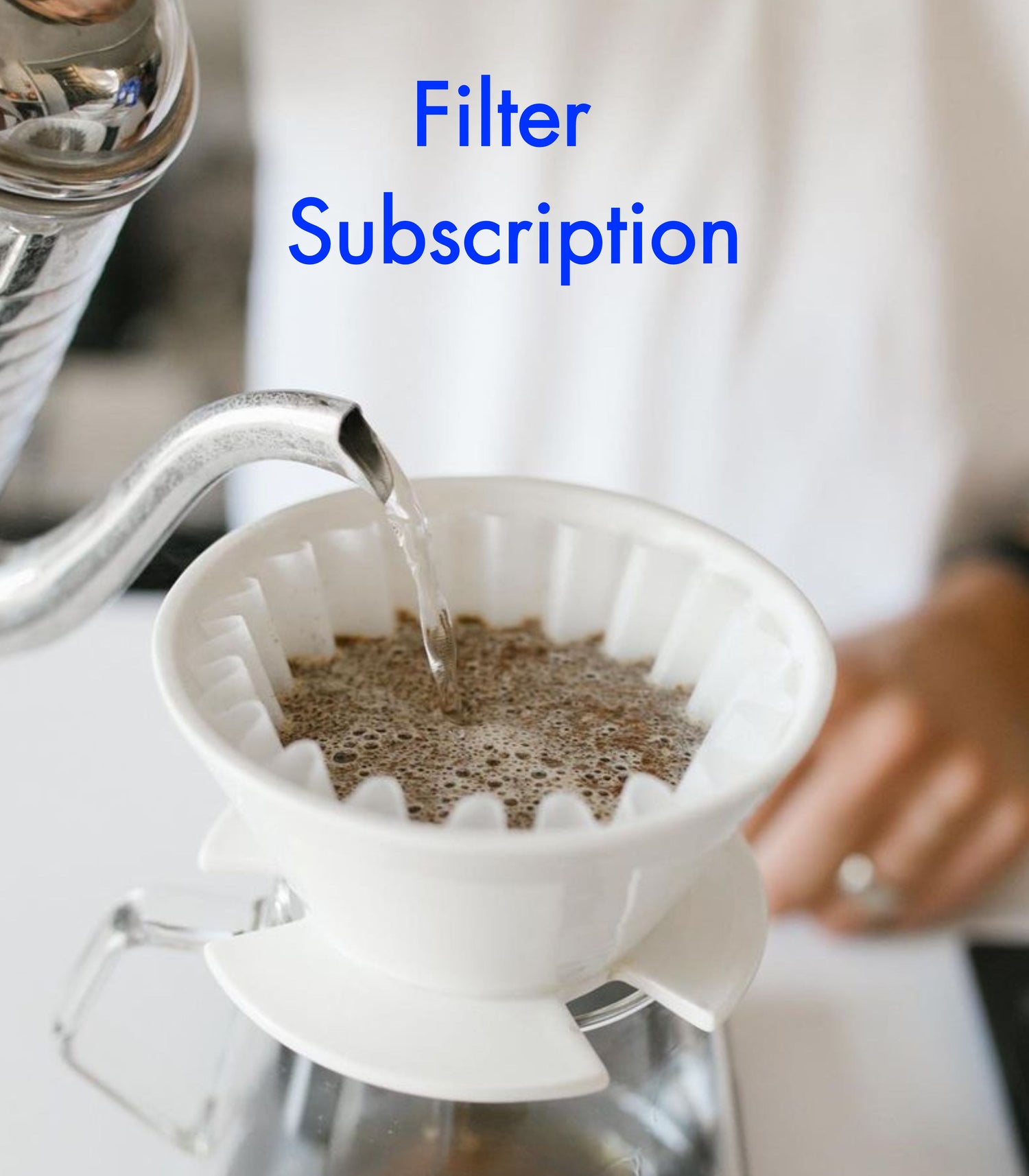
For pour-over, 16g coffee to 250g water is a good starting point. Use good filtered water, grind fresh if possible and adjust the grind according to taste. And let the coffee cool down – some of the most interesting flavours appear when the cup is warm rather than hot.
And finally...
Any closing message you would like to leave our subscribers? A little hope, joy or humour, or simply how you would like them to remember Keen?
Stay curious.
Coffee is something many of us drink every day, so it’s surprisingly easy to take it for granted. But there’s an extraordinary amount of work, knowledge, agriculture and flavour inside that little daily ritual.
With these three coffees you get to travel from Ethiopia to Guatemala to Uganda without leaving your kitchen.
Taste them, compare them, pick a favourite. Then try another coffee.
Explore. Taste. Repeat.
Enjoy!
Bonne, Joris & the Keen team


